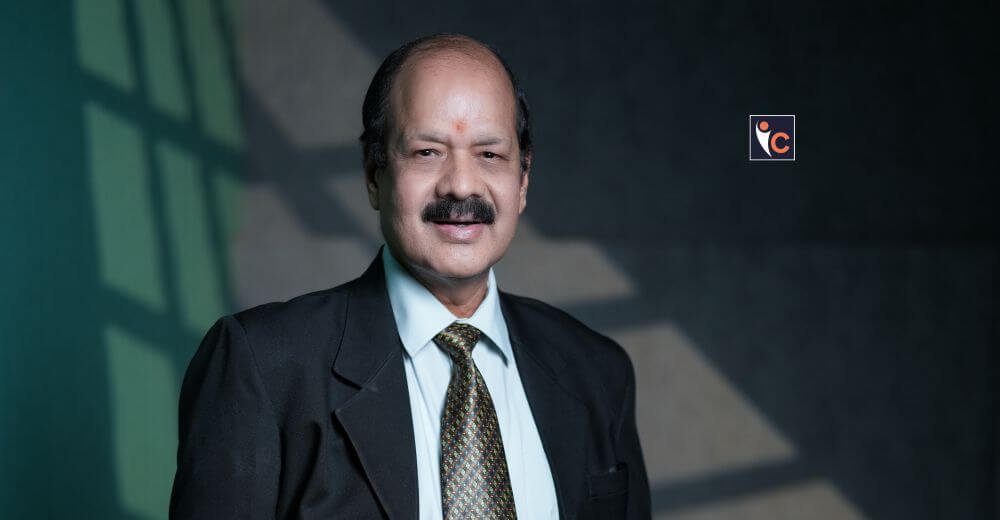
Dr. Sivakumaran Janakiraman, Chief Operating Officer at Kovai Medical Center and Hospital (KMCH), began his professional journey in the textile industry, specializing in materials management. This experience sparked a deep interest in supply chain dynamics and resource optimization. When he transitioned to KMCH as a Material Controller, he realized that while processes in both industries were similar, the stakes in healthcare were profoundly higher. In manufacturing, a delay in materials might slow production, but in healthcare, it could mean the difference between life and death. This insight transformed his perspective and strengthened his commitment to healthcare logistics. By refining processes to ensure critical medical supplies are available exactly when needed, he laid the foundation for his career in hospital administration.
Let’s delve into the interview details below!
As the COO of Kovai Medical Center and Hospital, what are your primary responsibilities, and how do you ensure operational excellence across such a large healthcare organization?
The primary responsibility is patient care and ensuring their comfort during their stay with us. To achieve this, we have embedded a patient-centric culture throughout the organization. Every activity is focused on enhancing the patient experience. While systems and protocols are firmly in place, the administrative team supports the technical staff who interact directly with patients. We optimize resources and have automated many areas with the help of technology, driven by a commitment to excellence.
Providing higher-quality patient care often increases operational costs, but we have embraced AI-driven technologies to bridge this gap. For instance, our Porter System functions like Uber for internal patient transport. When a request is made, the nearest wheelchair operator is assigned, ensuring swift service and improved efficiency. Similarly, our Tracker System enables the digital location of patient files, reducing delays and enhancing workflow. These innovations allow us to maintain high standards of care while optimizing operations—a balance that defines our commitment to excellence. Although we do not charge patients extra for these technologies, we continue to implement them to enhance the patient experience.
How would you describe your leadership style, and what practices do you follow to motivate your team in such a high-stakes environment?
In my opinion, leadership in this industry cannot be confined to a single universal philosophy. It requires a dynamic blend of complementary approaches to form a cohesive and results-oriented style. Our leadership combines democratic, inspirational, and collaborative elements, providing agility rather than rigidity. To foster trust, respect, and shared purpose, this style adapts to changing contexts. Such flexibility allows for inclusive decision-making, empowers individuals, and nurtures a culture of continuous growth and accountability.
Team members are encouraged to perform with full freedom within a defined framework. Participatory decision-making instills a sense of ownership and responsibility. We recognize that every individual has unique strengths, which, when identified and nurtured, can significantly contribute to the organization. Every success, no matter how small, is celebrated and acknowledged in gatherings. Team members have a clear career growth plan, and the first choice for new positions and promotions is offered from within the existing team. Additionally, intensive training programs enhance their knowledge and skills, further supporting professional development.
What are some of the biggest challenges you have faced in healthcare operations, and how did those experiences shape your approach to problem-solving?
The foremost challenge is the hiring and retention of trained manpower. As the industry grows rapidly, competition for skilled professionals has intensified. While attrition is inevitable, we have a robust training program at every level to nurture employees to the highest standards. Promotions are based on merit rather than seniority, providing motivation for team members to contribute more. Additionally, we run numerous paramedical courses to ensure a steady supply of trained manpower, helping to offset attrition.
Rising operational costs present another challenge. Rapid technological advancements often require us to replace high-end equipment even before the investment reaches its breakeven point. Despite this, we are committed to providing quality service at an affordable cost. Our multi-branch network allows us to leverage volume and mitigate these expenses effectively.
Patients’ expectations in a corporate hospital are very high, which adds operational pressure. While they expect top-quality care and service, they often hesitate to pay premium prices. Patients also expect doctors to attend promptly with minimal waiting time, and even minor issues may lead them to approach consumer forums. Our agile strategies, combined with prudent financial management, help us meet these challenges while maintaining high standards of care.
Being recognized as “India’s Most Impactful Healthcare Operations Strategist” is a significant honour. What key achievements or initiatives do you feel contributed to this recognition?
Efforts, time, and contributions towards inventory control have been a significant achievement. While many well-known hospitals maintain inventory for 30 to 45 days of consumption, we keep around 10 days, rotating stock efficiently at least three times. For example, for a ₹100 sale, we maintain stock worth only ₹10.
Technology implementation across vital operational areas is another key contribution. For instance, the adoption of the Porter System, which functions similarly to booking an Uber. When a wheelchair is needed, the patient or nurse simply dials a number, and the nearest available porter responds promptly. This has improved patient satisfaction and enhanced operational efficiency.
We have also set up a solar park to reduce energy costs, with a capacity of 10 MW, meeting 60% of our consumption. Wind energy fulfills another 20%, resulting in substantial operational savings. The cost of the solar park was recovered in seven years, and the remaining 18 years will generate energy at minimal operational cost.
Previously, tracing patient medical records across OPDs was challenging. With the introduction of technology, we can now locate files digitally, increasing efficiency and enhancing the patient experience.
These are just a few of our projects, with many more initiatives actively underway.
Finally, what advice would you give to young professionals aspiring to make a meaningful impact in healthcare operations and management?
Hospital operations are not just about managing day-to-day activities. It is about ensuring that every patient feels seen, heard, and genuinely cared for. The system should create confidence in patients through technology, infrastructure, transparency, and ethical practice. It is a rewarding field with endless opportunities for those who are committed and empathetic. Success demands continuous learning, adaptability, and a service-oriented attitude. There is no shortcut to success, and no individual can claim victory, as this is purely teamwork. Leadership must be resilient, embrace learning from mistakes, and remain focused on patient-centric service.
Innovating Patient Care at KMCH
- Digital Radiology: A filmless environment where reports are shared via secure links.
- Automated Sample Testing: Samples sent via pneumatic tubes which are automatically segregated and routed for testing, cutting turnaround time by half.
- AI-driven Linac: Enables adaptive radiotherapy tailored to daily patient needs.
- Digital Medical Records: Currently being implemented to provide seamless access for clinicians and administrators.
- EICU: Deployment of electronic ICU units, cutting-edge remote patient monitoring and early warning systems enable clinicians to oversee patients’ conditions continuously, even beyond hospital boundaries.
- Green Energy: A pioneering step in green energy with the adoption of solar and wind energy, monitored via SCADA system.
- Porter System: Implementation of Porter management system to improve efficiency and quick access to patient care. It operates like an Uber app.
- MRTS(Medical Record Tracking System): Tracks medical records spread across Outpatient departments, ICUs, and theatres through a digital system, saving time and energy.
About KMCH:
Kovai Medical Center and Hospital (KMCH), located in Coimbatore, Tamil Nadu, has grown from a 250-bed facility in 1990 to a 2,250-bed quaternary care centre today. Over three decades, it has become synonymous with advanced treatment, compassion, and trust. This growth is driven by Dr. Nalla G. Palaniswami, Chairman and Managing Director, whose vision and leadership have shaped the hospital’s ecosystem, touching thousands of lives daily.
Dr. Arun N. Palaniswami, Executive Director and second-generation entrepreneur, leads KMCH with a focus on cutting-edge technology, education, affordability, and quality care. A US-trained professional, he has streamlined operations and introduced AI-based systems to enhance efficiency and patient experience.
KMCH houses 50 specialties under one roof, including a 150-bed critical care unit, eICU, and multi-organ transplant programs for kidney, liver, heart, lungs, and bone marrow. The hospital has been recognized by the state government for its excellence in these fields. Its medical college and allied health sciences institutions, including pharmacy, nursing, physiotherapy, and occupational therapy, ensure a steady supply of skilled professionals to support its operations.