Prime Highlights
- Parliamentary panel recommends doubling AB-PMJAY cover to Rs 10,00,000 per family annually.
- Over 435.2 million Ayushman Cards issued under the scheme as of June this year.
Key Facts
- AB-PMJAY is a federal health insurance scheme offering cashless treatment through empanelled hospitals.
- The scheme targets more than 550 million people aged above 70 years nationwide.
Background
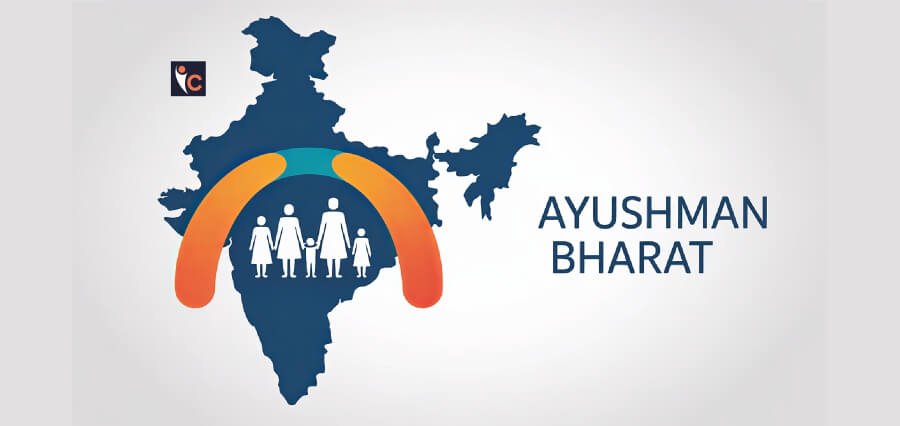
The Standing Committee on Health and Family Welfare has recommended doubling the insurance cover under the Ayushman Bharat-Pradhan Mantri Jan Arogya Yojana (AB-PMJAY) from Rs 5,00,000 to Rs 10,00,000 per family every year. The proposal features in the Committee’s 172nd report, tabled recently in Parliament.
The scheme, launched in 2018, is run and funded by the federal government. It offers cashless secondary and tertiary healthcare through a nationwide network of empanelled public and private hospitals.
The Committee said the increase was necessary because healthcare costs had risen sharply, and the existing cover was no longer adequate for many life-saving treatments. It noted that the cost of advanced cardiac surgeries, organ transplants, cancer immunotherapy and other specialised procedures had gone up considerably, and the current limit of Rs 5,00,000 often fell short for complex cases.
Such treatments can easily exceed the existing limit, forcing many families to bear high out-of-pocket costs despite being covered under the scheme, the Committee observed.
Industry sources said healthcare costs had risen steadily due to advances in medical technology, newer therapies and the growing burden of chronic diseases.
Official data showed that more than 435.2 million individual Ayushman Cards had been issued under the scheme by June this year. The scheme targets a base of over 550 million people aged above 70 years across the country.
The Committee said raising the cover to Rs 10,00,000 would provide stronger financial protection and help reduce catastrophic health spending. Members added that the move would particularly benefit economically vulnerable households, which often delay or avoid treatment because of financial constraints.