Enhancing Functional Recovery
When the brain or nervous system is affected by injury or illness, the impact on a person’s daily life can be profound. Simple tasks that were once automatic become difficult. Movement, speech, balance and coordination can all be affected in ways that change how a person lives and what they are able to do independently. Recovery from this kind of condition is rarely quick or straightforward, but it is possible to a degree that gives genuine hope. Neurorehabilitation sits at the heart of that recovery process, offering a structured and focused path back towards function, mobility, and a better quality of life.
Understanding What This Field Involves
Rehabilitation that focuses on the nervous system is a specialised area of care. It brings together professionals from multiple disciplines, including physiotherapy, occupational therapy, speech therapy and psychology, all working towards the shared goal of helping a patient regain as much function as possible after a neurological event.
The nervous system has a remarkable quality that science has come to understand more fully in recent decades. It has the ability to adapt, to reorganise and in some cases to find new pathways when old ones have been damaged. Neurorehabilitation utilises this quality and employs carefully planned activities and interventions to encourage the brain and body to rebuild connections between the brain and body, improving movement, communication, and independence.
The Importance of Early Intervention
Timing plays a significant role in recovery from neurological conditions. The immediate post-injury/acute event phase is a highly sensitive time for the nervous system for intervention. Beginning rehabilitation early, when the brain is in an active state of adjustment, can make a meaningful difference to the eventual outcome.
This does not mean that later intervention has no value. Recovery can continue long after the initial period, and patients who begin rehabilitation at a later stage can still make real progress. But the evidence consistently points to early, consistent engagement with a structured recovery programme as one of the strongest factors in achieving better long-term results. Neurorehabilitation teams are trained to begin this work as soon as it is medically appropriate to do so.
Restoring Movement and Physical Function
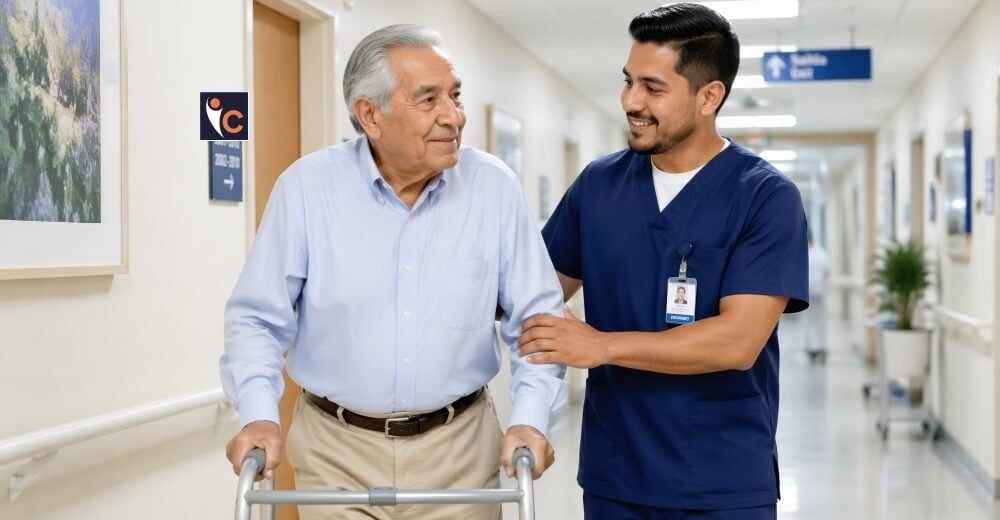
For many patients, the most immediate concern is the loss of physical function. The ability to walk, to use the hands, to sit upright without assistance — these are the foundations of daily independence and losing them even partially has a profound effect on a person’s life and sense of self.
Restoring movement requires repetition, patience and a carefully graded progression of challenge. Learning is through doing and the nervous system reinforces neural pathways through repetition. Neurorehabilitation uses this principle through specific movement exercises, retraining and progressive strengthening of movement patterns. Steps toward progress are often small, but cumulative, so that over time they result in more meaningful improvements in function and mobility.
Addressing Communication and Cognitive Recovery
Physical movement is not the only area affected by neurological conditions. Many patients also experience changes in their ability to communicate, to process information, to remember or to concentrate. These cognitive and communicative challenges can be just as limiting as physical ones, and they deserve the same focused attention within a recovery programme.
Speech and language therapy addresses difficulties with talking, understanding, reading and writing. Cognitive rehabilitation works on attention, memory and problem-solving. Together, these elements of neurorehabilitation help patients rebuild the mental capacities that support their ability to engage with the world around them, to maintain relationships and to manage their daily lives with greater independence.
The Role of the Patient in Their Own Recovery
Recovery from a neurological condition is not something that happens to a patient. It is something they participate in actively. The effort, consistency and motivation a patient brings to their rehabilitation has a direct bearing on what they are able to achieve. This places a real responsibility on the patient, but it also gives them genuine agency in their own story.
Good rehabilitation teams understand this and work to keep patients engaged, informed and genuinely invested in their progress. Neurorehabilitation is most effective when patients understand why each activity matters, can see their own progress over time, and feel supported by the people around them.
Conclusion
The journey through neurological recovery is rarely easy, but it is one that many people travel with determination and real results. Neurorehabilitation provides the structure, the expertise, and the support that makes this journey possible. It combines with the body’s ability to adapt and heal, allowing patients to regain their most important functions, mobility and independence in a real way. With the right care, the right team and the right commitment, recovery is not just a possibility. It is a goal worth working towards every single day.