This is a defining decade for healthcare in India. Medical science, Imaging, and AI are giving doctors new ways to help patients. From rural areas to urban hospitals, good and efficient care matters more than ever. As India grows, improving diagnostics and teaching future doctors will be key to the country’s success.
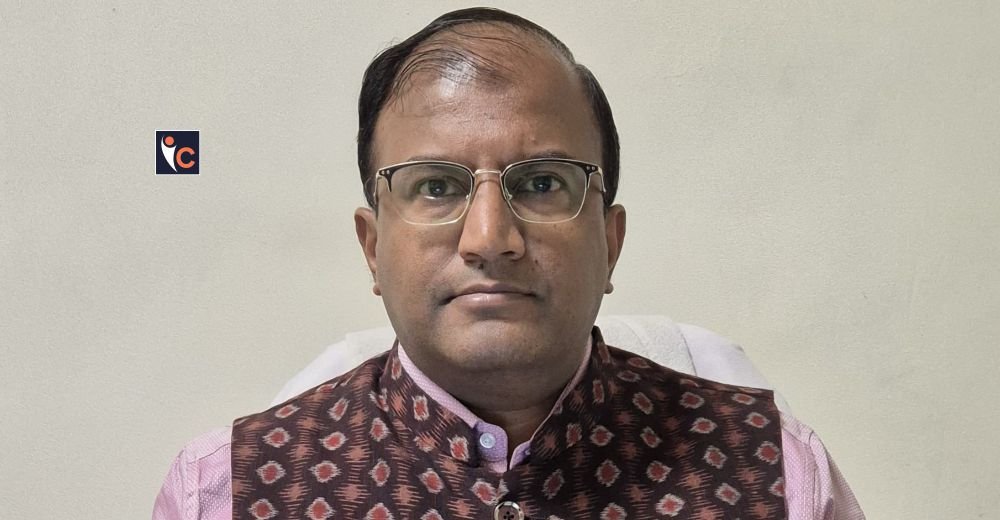
At the center of this change stands a Physician, Academician, and Researcher whose life’s work bridges technology, human compassion, and education. Dr. Rajul Rastogi (Gold Medalist) serves as Professor in the Department of Radiodiagnosis and Chairman of the College Research Committee at Teerthanker Mahaveer Medical College & Research Center, Moradabad, U.P. For more than 25 years, he has contributed to patient care, teaching, research, and the use of AI in healthcare learning.
What makes him special is not only his achievements but also his way of thinking. Dr. Rajul Rastogi believes that medicine is more than following what already exists. It is about creating new ideas and approaches that fit India’s unique healthcare needs. For him, research and patient care go hand in hand. As he explains, “It is now more than 25 years since I started my journey in the field of Radiodiagnosis & Imaging. Besides, being in academia, I’m always dedicatedly working for the healthcare of my nation as part of my daily routine, which is my duty and responsibility.”
Let’s take a closer look at the journey of Dr. Rajul Rastogi and explore how his work is shaping the future of healthcare and medical education in India!
A Passion Rooted in Youth
From his earliest years, his passion for healthcare was evident. While most adolescents explored short-lived hobbies, Dr. Rajul Rastogi was already immersing himself in health and nutrition. He recalls with clarity, “Health and Nutrition has been my favorite reading content right from my adolescence. I remember to have more than 1000 newspaper & health magazine cuttings as my collection by the end of my 10+2.” This relentless curiosity laid the foundation for a career marked by dedication to lifelong learning.
Dr. Rastogi’s entry into medicine was driven as much by compassion as curiosity. He shares, “My desire to do graduation in Medical Science also came out of compassion which inclined me to opt for MBBS course post-12th standard.” Once immersed in the MBBS curriculum, he found himself drawn irresistibly to Radiodiagnosis & Imaging, the discipline that allowed doctors to see inside the human body without surgical intervention. The influence of a teacher at JLN Medical College in Ajmer became decisive. “During the course of MBBS, I was fascinated by the field of Radiodiagnosis as it allowed specialized doctors to peep inside the body without the need of surgical cuts. To add to this, was my Great Radiodiagnosis Teacher Prof. (Dr.) G.L. Verma Sir from JLN Medical College, Ajmer whom I consider to be my first role model motivating me for Radiodiagnosis.”
A Desire to Create Knowledge
His entry into postgraduate studies brought a sobering realization. The literature and concepts he encountered in his MD program were overwhelmingly drawn from Western populations and contexts. He soon recognized the need to build an Indian body of knowledge, one that accounted for the distinct genetic, demographic, and environmental realities of the country.
“Very soon, when I entered the MD course in Radiodiagnosis, I realized that whatever we are reading comes from the West which does not suit the needs or desirably fit for the general Indian population. In addition, I developed the desire of creation and adding something to the existing knowledge,” he says. That dual recognition of limitation and opportunity propelled him into Academia and Research. For him, scientific creation was not optional; it was a responsibility. “I have realized that to accelerate the journey of our Nation from developing to developed state, requires more & more creation rather than just following ideas & concepts coming from the West.”
The impulse to lead and inspire younger generations became equally central. He believes that India requires more research-oriented Radiologists who are prepared to contribute to long-term national goals. As he puts it, “In addition, we need more and more, Research-oriented Radiologists from the younger generations who are the future of our Healthcare system. The desire to make my country & younger generation proud, keep me energetic and on-toes.”
Continuous Learning
The physician-scholar’s approach to education is marked by humility and rigor. Dr. Rajul Rastogi is clear that the formal MD course is not an endpoint but a foundation. “During my postgraduation, I realized that 3-years MD course in Radiodiagnosis is only enough to create an attitude in Radiodiagnosis and to establish a basic but definitely a strong foundation.”
Medicine, in his view, is borderless and endlessly evolving. Certifications and Fellowships in Advanced Imaging, Cardiology, Nutrition, Computer Applications, and AI in Healthcare have expanded both his expertise and his confidence. This constant learning also multiplies his ability to mentor. “These Advanced Certifications and Fellowships have not only improved my knowledge & confidence while performing my day-to-day clinical work but also has allowed me to shape the future of many Post-Graduate Residents and PhD scholars working under my guidance.”
Artificial intelligence has been particularly influential. Its role in streamlining routine imaging tasks has freed time and energy for complex diagnostic reasoning. He emphasizes, “AI in healthcare especially helped to understand how time-efficiency & accuracy can be improved while performing multiple tasks in the field of Radiodiagnosis & Imaging throughout the day, also helping to minimize errors that may impact the overall management of the patients.”
The Coming Decade
Looking forward, Dr. Rajul Rastogi expects AI to revolutionize Radiodiagnosis in ways that are hard to imagine today. The ability of AI modules to perform measurements, generate preliminary diagnosis, and integrate multimodality data will liberate Radiologists for higher-order analysis.
“AI is going to reshape the future Radiodiagnosis to an extent unbelievable by many in the next decade allowing the Radiologist to focus more on complex diagnosis rather than doing just measurements or giving straightforward diagnosis as these tasks will be easily & accurately performed within seconds to minutes by the AI modules,” he observes. He envisions AI not just in interpretation but also in acquisition, quality control, and integration with clinical and laboratory data. The result is faster, more discrete, and more accurate diagnosis across the healthcare spectrum.
Leading a Committee
As Chairman of the College Research Committee, Dr. Rajul Rastogi occupies a pivotal position where curiosity meets institution-building. His leadership has sparked a measurable shift in the number and quality of research initiatives. Collaborations across medical specialties have yielded projects with the potential to redefine practice. Some, he notes, remain confidential but are ready for release as research papers, patents, and innovative procedures. The role is both administrative and personal, representing his conviction that structured research is the backbone of medical progress.
Bringing AI into Medical Education
The educator in him sees AI not merely as a diagnostic tool but as a transformative teaching instrument. For young medical graduates, AI-powered animations and interactive tools demystify complex topics and make learning more engaging. Dr. Rajul Rastogi highlights how AI enables accessibility: “In fact, bringing AI into medical education attracts more and more medical graduates as it allows creation of the animations and teaching materials in easily understandable form. In addition, it allows the health professionals to reach the remotest part of the country so that diseases can be identified at an early stage before it becomes unmanageable.”
Equally powerful are AI-enabled chatbots, which offer 24/7 interactive learning interfaces. These tools embody his vision of education as interactive, skill-centric, and inclusive of even the most remote learners.
Building an Ecosystem of Innovation
Teerthanker Mahaveer Medical College & Research Center, where he serves, is distinguished by its infrastructure and ethos. Advanced facilities, patient-centric care, and a culture of research create an environment where innovation can flourish. “Our prestigious institution has created an Advanced Infrastructure in all the Departments including Radiodiagnosis along with a conducive & congenial environment of learning for Graduates, Post-Graduates, Paramedical & Healthcare-Allied Students,” he explains.
The institution’s appeal is not limited to learners; it also attracts patients who value the integration of technology, expertise, and compassion. The environment fosters both learning and service, ensuring that research is not confined to theory but finds its way into clinical application.
Advances in Cardiac Imaging
Cardiovascular disease remains India’s most pressing health challenge. Here, too, he sees Radiodiagnosis as indispensable. CT and MRI imaging are critical not only for early detection but also for informing treatment and surgical decisions. These technologies play an important role in managing congenital heart disease and in aiding Cardiologists and Cardiac Surgeons with precise information.
What excites Dr. Rajul Rastogi most are recent trends in AI-assisted cardiac imaging. High-speed reconstruction, automatic segmentation, and automated calculations promise unprecedented efficiency and accuracy. These tools make it possible to capture and process critical cardiac information in ways that were previously unimaginable.
Interdisciplinary Strength
His qualifications span a remarkable spectrum: Radiodiagnosis, Cardiology, Nutrition & Dietetics, Computer Applications, and Medical Ethics. To some, these may appear disparate, but in his practice, they converge seamlessly. His background in computer science gives him an edge in understanding and optimizing the operation of complex medical equipment, as well as in guiding residents and scholars in developing new imaging tools.
His cardiology expertise enables him to interpret CT and MRI results with a clinician’s eye, aligning radiological insights with the needs of Cardiologists and Cardiac Surgeons. Meanwhile, his grounding in nutrition reforms both personal health and patient education, reflecting his belief that prevention and lifestyle are integral to medical care.
Ethics in a Changing Industry
With certifications in Medical Ethics, Dr. Rajul Rastogi sees ethical practice as more urgent than ever in an era when medicine is increasingly commercialized. “Medical Ethics teaches the art of practicing medicine in a manner that no one is harmed keeping in mind not to discourage the patients from getting a beneficial treatment carrying a very meagre complication-risk.”
He stresses that ethics extends beyond patient interaction to relationships with seniors, colleagues, and juniors. In a time when modern medicine is often described as an industry, he insists on patient-centricity: “In the present era, where modern medicine has become a healthcare industry, following Medical Ethics has achieved higher significance teaching the healthcare professionals to work in the benefit of the mankind & be patient-centric rather than being money or capital-centric.”
Skills for the Next Generation
For future Radiologists and Healthcare Professionals, he prescribes a triad of soft skills: Attitude, Behavior, and Communication, the ABC of practicing Medicine in any-form. These, combined with technical knowledge and augmented by AI, will enable practitioners to deliver reliable and empathetic care. He underscores the need for robust research and development, insisting that personalized care must be the ultimate goal of every healthcare professional.
Youth and the Innovation Ecosystem
Young doctors and researchers, in his view, are uniquely positioned to drive health-tech and med-tech innovation. Their energy and disruptive ideas, if properly nurtured, can accelerate India’s progress. The challenge is channeling that energy into systematic pathways that serve both individual patients and the national healthcare system.
Challenges in Medical Education
Among the challenges facing medical education in India, he identifies disparities in infrastructure and faculty availability as the most pressing. Uniformity in training remains elusive, affecting competence across the nation. Transitioning to newer techniques while phasing out older ones is also fraught with difficulty, often straining both professionals and patients.
The solution, he argues, lies in investment in indigenous medical devices of international quality, which will reduce family healthcare expenditures and promote self-reliance. Alongside, public awareness about the importance of maintaining good health must be elevated, for prevention is as critical as cure.
Research as Daily Practice
He views research not as an abstract pursuit but as an inseparable part of clinical practice. Everyday observations and experiences form the foundation, though he acknowledges that these must evolve into systematic, scientific, and transferable knowledge. “In my opinion, Research is a part and parcel of day-to-day clinical practice. The commonest form of Research is Experience and Observations that a Medical Professional acquires over a period of years and decades that help him to deviate from the standard protocols in an attempt to impart personalized medical care.”
But true progress requires more. “The true research involves systematic scientific approach that is acceptable globally to the scientific community and is based on objective tools & methods,” he explains. Dissemination through journals, magazines, and newspapers ensures accessibility to both professionals and the general public. Only then can disruptive practices move from theory to wide-scale benefit.
A Message for the Future
In closing, he frames healthcare as both a calling and an industry with immense opportunity. Dr. Rastogi’s message is one of balance: between service and innovation, between earning a livelihood and serving humanity, between individual growth and national progress. “Healthcare is a perennial profession of repute and mental satisfaction in the human society with immense opportunities of serving the mankind as well as developing new tools, methods and protocols allowing to reshape the existing practice.”
With awareness of health rising and the sector positioned for exponential growth, Dr. Rajul Rastogi believes the next decades will reward those who combine compassion with innovation. For aspiring professionals, the promise is not just of money, but of name, fame, and the rare satisfaction of contributing to human well-being.