Over the years, orthopedic care in India has advanced through improved surgical practices, faster trauma response, and the growing use of medical technology, such as robotics and artificial intelligence.
However, these improvements have not reached everyone equally. Many patients still struggle with affordability, delayed care, and limited rehabilitation support. This makes ethical decision-making and patient accountability essential parts of healthcare leadership today.
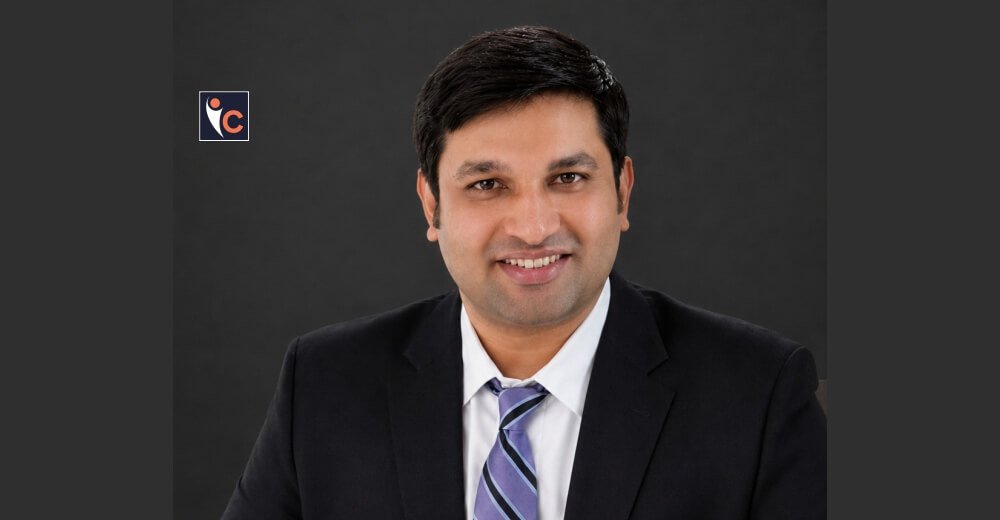
Dr. Vijaykumar N. Deshpande, Consultant Orthopedic Surgeon and Joint Replacement Surgeon, and Co-founder and Head of the Department of Orthopedics at Saideep Sahyadri Hospital, represents this balanced approach. His work over the years combines clinical practice, trauma system development, and institution building, guided by clear professional values.
Let’s look at a career driven by integrity, skill, and patient trust!
Early Life and Rural Foundations
Dr. Vijaykumar N. Deshpande was born in 1958 into a family of teachers. His upbringing took place in a small village with a population of around 800 people. Educational resources were limited, and his village school provided classes only up to the fourth standard. To continue his studies, he walked three to four kilometers every day to attend school in the next village.
These early experiences shaped his understanding of rural life, discipline, and the value of education. Growing up in a modest environment also gave him first-hand exposure to the healthcare challenges faced by rural communities, an understanding that later influenced many of his professional decisions.
Medical Education and Government Service
After completing his schooling, he pursued medical education at Government Medical College, Aurangabad, which is now known as Chhatrapati Sambhaji Nagar. Instead of entering private practice immediately, he chose public service and joined the government’s health system.
From 1981 to 1986, he worked at a primary health center, where he served rural populations and delivered essential healthcare services. His responsibilities extended beyond clinical care and included active involvement in six national health programs. These included vaccination and immunization drives, blindness control programs, family planning and welfare initiatives, leprosy control, and tuberculosis control programs.
This phase of his career provided deep exposure to preventive medicine, public health delivery, and the realities of healthcare administration at the grassroots level. His performance during this period led to his selection for postgraduate medical education.
Postgraduate Training in Orthopedics
Dr. Vijaykumar N. Deshpande completed his MS in Orthopedics at the JJ Group of Hospitals in Mumbai under Bombay University. Training at a high-volume tertiary care institution gave him extensive exposure to trauma, orthopedic emergencies, and complex surgical cases.
After completing his MS, he continued in government service as a bonded candidate and worked in various civil and district hospitals. These postings further strengthened his experience in trauma management, emergency orthopedic care, and surgical planning in resource-limited settings. They also gave him a deep understanding of society, its challenges, and potential solutions.
Once his bond period was completed, he decided to move into private practice.
Establishing Independent Practice
He began private practice with a small 10-bedded hospital, which gradually expanded to a 60-bedded facility. During this period, trauma care became his primary focus. He recognized the importance of timely intervention in trauma cases and the impact it has on patient survival and recovery.
Understanding the concept of the Golden Hour, he established the first organized trauma care center in Ahmednagar, now known as Ahilya Nagar. This center brought together multiple specialists, including a neurosurgeon, intensivist, general surgeon, plastic surgeon, and orthopedic care under one setup.
The trauma center became a leading facility in the district, known for coordinated emergency care and improved outcomes.
Formation of a Tertiary Care Hospital
With a shared vision for comprehensive healthcare, Dr. Vijaykumar N. Deshpande joined hands with Dr. Deepak chairing the group, Dr. Dhoot, Dr. Jhalani, Dr. Somani, Dr. Kurhade, Dr. Shaikh Nisar, Dr. Harmeet Kathuriya, Dr. Shridhar Badhe, Dr. Bhushan Kharche, Dr. Rohit Dhoot, Dr. Kekade, Dr. Sangeeta Kulkarni, Dr. S. M. Iqbal, Dr. Kiran, Dr. Rahul Dhoot, Dr. Ashwin Jhalani, Dr. Aniket Kurhade, Dr. Vaishali, Dr. Kasturi Kurhade, and Dr. Shaikh Sahil to establish a large multi-specialty hospital. Their aim was to provide quality medical care with modern infrastructure, controlled environments, and all major specialties under one roof, where technology and human expertise work together seamlessly.
This collective effort resulted in a 260-bedded tertiary care hospital with eight operation theaters, including dedicated units for cardiac surgery and maternal and child health. Today, the hospital has more than 800 staff members and over 100 doctors, making it the largest healthcare facility in the town and district.
The hospital later became part of the Sahyadri Group of Hospitals, an OTPP venture that initially involved a Canadian company and is now associated with the Manipal Group of Hospitals. The founding doctors continue as shareholders, ensuring continuity in leadership and values.
Patient Trust and Ethical Practice
For Dr. Vijaykumar N. Deshpande, trust forms the foundation of medical practice. He believes that when patients are treated with honesty and empathy, long-term relationships naturally develop. As he explains, “If we consider the patient as our family member, and if we offer the same treatment that we would give to our mother, brother, spouse, or family member, then trust automatically develops.”
He consistently emphasizes that financial gain should never drive clinical decisions. “Money is just a byproduct. It should never be the main goal.” His focus remains on scientific treatment, clear communication, pain management, proper follow-up, and structured rehabilitation.
According to him, ethical practice is essential for sustained credibility in medicine, and transparency with patients is non-negotiable.
Managing Difficult Clinical Decisions
Orthopedic practice often involves complex and emotionally difficult decisions, particularly in trauma cases. One such situation is limb amputation, which can be life-altering for patients. Dr. Vijaykumar N. Deshpande approaches these conversations with clarity and sensitivity.
He explains to patients the difference between acute and delayed care, emphasizing that in certain situations, saving life is more important than saving a limb. By discussing rehabilitation options and quality of life after limb loss, he helps patients and families understand the rationale behind such decisions.
Outside of his professional commitments, Dr. Vijaykumar N. Deshpande enjoys several hobbies. He is an avid cyclist and once cycled across Switzerland in 10 days. He also enjoys weekend golfing and leisure travel, which allow him to unwind and stay active.
Role in Medical Leadership and Policy
Beyond clinical work, Dr. Vijaykumar N. Deshpande has played an active role in professional medical associations. As President of the Maharashtra Orthopedic Association, he focused on training and communication programs for young doctors and contributed to developing structured trauma care systems.
During this time, the concept of GPS-enabled roaming ambulances connected to district-level control rooms was proposed. This idea was later implemented by the Maharashtra Government as the Golden Hour Trauma Care Project, which now operates efficiently across the state.
He has also served as an Executive Committee member of the Indian Orthopedic Association, President of the Indian Medical Association at the district level, and President of the Hospital Owners Association. Through these roles, he worked on issues related to patient communication, medical documentation, and doctor safety.
Use of Technology in Orthopedic Care
Modern technology plays a central role in orthopedic outcomes at the hospital. AI-assisted X-rays help reduce diagnostic errors, while advanced, sonography, CT scans, and MRIs support accurate diagnosis in trauma and orthopedic emergencies. 3D ST scans and 3D printing enables understanding complex anatomical situations and complex trauma.
In joint replacement surgery, robotics has improved precision and personalization. Traditional mechanical alignment has been replaced by individualized approaches such as kinematic, anatomical, and functional alignment. With nine recognized knee phenotypes, robotic systems can detect variations as small as one or two millimeters or a few degrees.
This level of accuracy improves surgical outcomes and patient satisfaction. As Dr. Vijaykumar N. Deshpande notes, “Ultimately, our goals are pain relief and patient happiness.”
Current Challenges in Orthopedic Care
Despite advancements, orthopedic care in India faces several challenges. There is a clear gap in access to specialists between urban and rural areas. The aging population has increased the incidence of osteoarthritis, osteoporosis, and geriatric orthopedic problems.
Surgical site infections remain a concern due to antibiotic misuse and resistant bacteria. Financial burden on patients continues, as out-of-pocket expenses remain high. Although government schemes such as Ayushman Bharat and Mahatma Jyotiba Phule Yojana have expanded access, implant quality under some schemes remains outdated, with continued use of stainless steel instead of MRI-compatible titanium implants. This happens due to a poor compensatory amount.
The government should provide an adequate package based on cost accounting to create a win-win situation for all parties. Land, staff, and equipment are costly for private hospitals, along with drugs, medicines, and consumables. The packages currently offered do not even cover fifty percent of the expenses incurred.
Rehabilitation services are also often underemphasized, even though long-term recovery depends heavily on physiotherapy and ergonomic support.
Guiding the Next Generation
Mentorship has been an important part of Dr. Deshpande’s professional journey. He encourages young orthopedic surgeons to focus on ethics, continuous learning, and patient-centered care. According to him, professional growth does not happen overnight, and reputation is built over years of consistent practice.
He has served as a postgraduate teacher for DNB students and has mentored many aspiring surgeons throughout his career. In addition, he has delivered lectures at national and international conferences and serves as faculty at multiple conferences and meetings. Dr. Vijaykumar N. Deshpande also has a special interest in evidence-based medicine, emphasizing the importance of applying research and clinical data to improve patient outcomes.
He strongly believes that learning should never stop, regardless of age or experience. Sharing his advice with young doctors, he reminds them: “A degree only gives you a license to practice, not a successful career.”