Bridging the Skills Gap
India’s healthcare system is changing quickly. New technologies, policies, and the growing need for quality care are transforming how the sector works. However, one major problem still stands: the lack of skilled healthcare workers. Even though India produces thousands of professionals every year, many still do not have the practical or digital skills needed in today’s healthcare system. Now, with the help of digital learning, simulation-based training, and partnerships between the government, universities, and private companies, India is reshaping how it trains its healthcare workforce.
The article explains how India is improving healthcare training through modern learning methods, technology, and teamwork to build a more skilled and prepared workforce.
The Skills Gap Challenge
India faces both a shortage and an uneven distribution of healthcare workers. The number of doctors required in the country to be able to satisfy the existing demand is nearly twice the number currently available; the number of nurses required is also triple, and the number of paramedics required is also four times.
Approximately 70 percent of the Indian population resides in rural regions, whereas only about 35 percent of the healthcare personnel serve in rural regions, resulting in many regions lacking adequate healthcare facilities.
Healthcare is also becoming more complex. Digital records, telemedicine, and data-driven decision-making have changed how hospitals operate. Doctors, nurses, and administrators must now constantly update their skills to keep pace with new technologies. Traditional classroom learning no longer meets these modern requirements.
Government Efforts to Bridge the Gap
The Indian government has taken strong steps to improve healthcare training and build a skilled workforce. Initiatives like the Skill India Mission, Ayushman Bharat Digital Mission (ABDM), and National Health Mission (NHM) have laid the foundation for nationwide upskilling.
Under the Centrally Sponsored Scheme, more than 150 new medical colleges have been opened to expand access to medical education. But simply increasing the number of graduates is not enough; every worker needs hands-on, updated, and digital training to provide quality care.
New and Modern Training Models
Digital Health and Modular Learning
Partnerships between education and technology organizations are changing how healthcare training works. The Koita Foundation, working with leading universities, introduced India’s first Digital Health Foundation Course. It combines real-world applications such as digital health records and telemedicine with flexible, modular lessons. These online programs allow healthcare professionals across the country to keep learning while working.
This is a new method that no longer relies on the theoretical background of teaching, but gives way to interactive and skills-oriented education. It assists professionals in developing the online knowledge required in the current healthcare system.
Simulation and Virtual Training
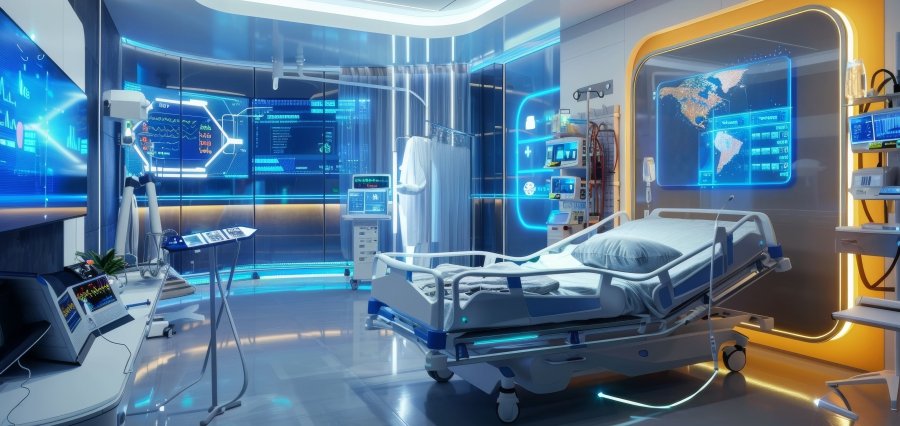
Simulation-based learning is now a key part of healthcare education. The Symbiosis Centre for Health Skills (SCHS) provides virtual hospital setups where students can practice clinical and emergency care safely. These simulations help improve decision-making, teamwork, and confidence.
Tools like virtual reality (VR) and augmented reality (AR) are also becoming common. They enable students to simulate complicated medical procedures in the virtual world before actually performing the procedure in the real world and this provides them with good experience and accuracy.
Building Soft Skills and Leadership
The contemporary education in healthcare not only provides medical skills but also communication, empathy and leadership as well. Training programs encourage healthcare workers to build stronger patient relationships and understand cultural and ethical issues. Activities like role-play, storytelling, and interactive learning modules help improve these essential skills.
Leadership training has also become more important. Courses now include systems thinking, digital literacy and change management. These help professionals make quick decisions and lead effectively in hospitals and healthcare organizations.
Challenges and the Road Ahead
Despite major progress, several issues continue to slow down growth. There are still a lot of rural settlements where there are no proper training facilities or the internet. Some healthcare workers need more digital knowledge to fully benefit from online learning.
Continued investment, better infrastructure, and regularly updated courses will be key to solving these issues. Even so, the outlook remains positive. India is steadily building a larger, more skilled, and tech-ready healthcare workforce.
Conclusion
Bridging India’s healthcare skills gap is not only about producing more professionals, it’s about changing how they learn. Digital platforms, simulation labs, and flexible learning programs have turned education into a more practical and interactive process.
With new ideas and teamwork, India is building a stronger and more caring healthcare system. This marks the beginning of a new phase where every healthcare worker is better prepared to treat patients and handle modern challenges. As India moves forward, it is closing its skills gap and building a stronger, healthier nation.
Read also : Plyometric Exercises: Unlock Explosive Power and Performance